
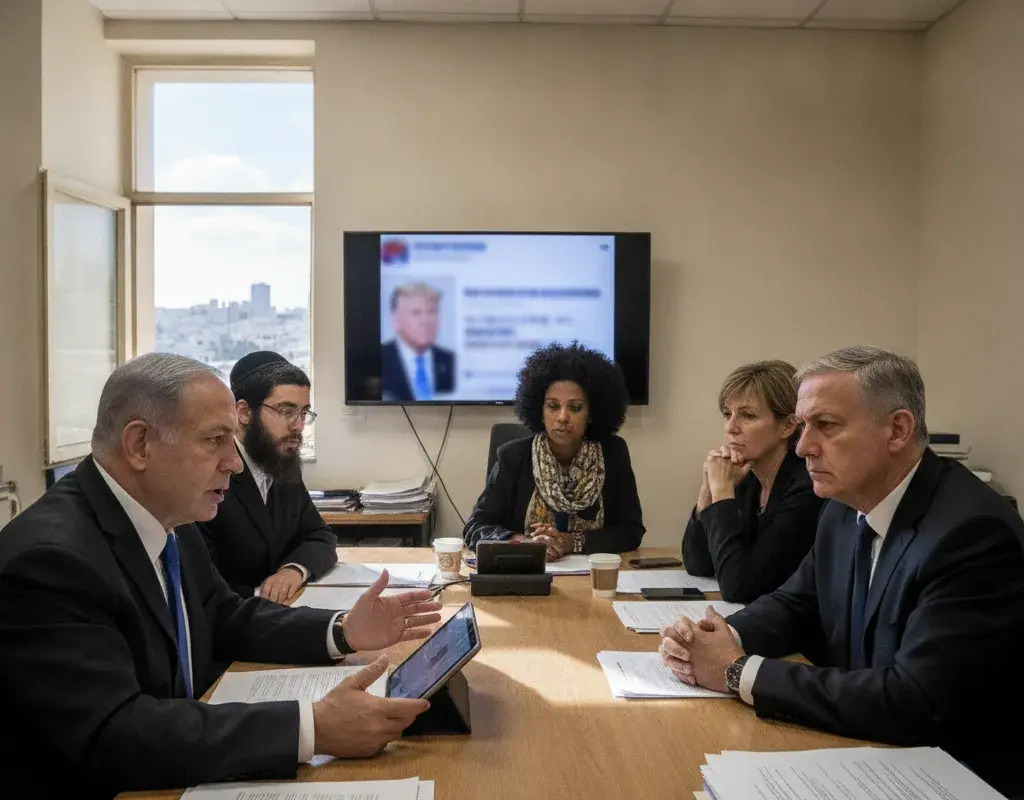
With less than a week until an election many Israelis view as a historic turning point, the nation finds itself trapped in a deadlock. Benjamin Netanyahu, fighting through corruption charges and desperation, faces off against Gadi Eisenkot, a composed former military chief whose lack of political instinct makes him steady but unremarkable. While external forces have attempted to swing the pendulum, including a blunt endorsement from Donald Trump via Truth Social, these efforts have been neutralized by internal chaos. A controversial segment by right-wing host Yinon Magal, which targeted Eisenkot with racial slurs regarding his Moroccan heritage, largely offset any gains Netanyahu might have made from American intervention.
Despite the noise, polling remains stubbornly flat. Eisenkot’s Yashar party holds a slim lead over Netanyahu’s Likud, yet neither can claim a path to a parliamentary majority. Because Israeli law allows the leading candidate forty-two days to build a governing coalition, small fringe parties often wield immense leverage. This year, that power rests with two newly formed movements catering to hawkish voters who are angry over the failures of October 7 but hesitant to embrace the liberal opposition. Both groups are currently hovering right at the threshold required to enter parliament, meaning their success or failure could decide who ultimately leads the country.
One such group is Amcha Yisrael, led by Ofer Winter, a former brigadier general known for advocating Palestinian migration from Gaza. Winter embodies a younger generation of religious nationalists and settlement leaders. However, his standing has wavered since he pledged total loyalty to Netanyahu despite running on a platform born from the disasters of the current administration. Critics argue that tying his fate to the prime minister was a strategic blunder, and there are whispers that Netanyahu himself initially encouraged Winter’s run only to later try and pressure him out once polls suggested he might fail to cross the threshold and waste valuable right-wing votes.
Standing in contrast is Yoaz Hendel and his alliance between the New Economic Party and The Reservists. Combining economic concerns with a demand for mandatory military service for ultra-Orthodox citizens, Hendel positions himself as the voice of disillusioned reservists under forty who are struggling with inflation and broken security promises. As a former aide turned critic of Netanyahu, Hendel views his movement as a calculated protest vote targeting those who believe Netanyahu bears responsibility for October 7 but cannot bring themselves to vote for the left. Together, these unpredictable newcomers represent the wild cards in an election where every single percentage point counts toward survival or defeat.