

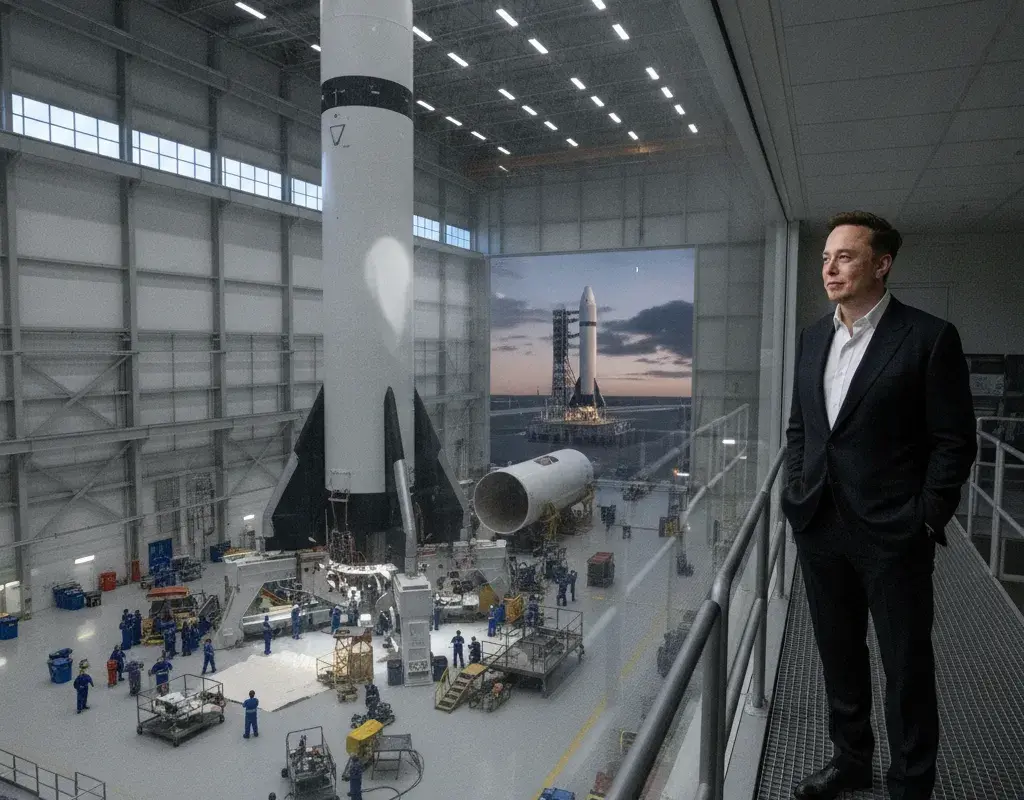
Elon Musk is setting his sights on a financial milestone that sounds more like science fiction than a corporate balance sheet. During a discussion regarding third quarter operating results, the SpaceX CEO revealed a staggering revenue forecast, suggesting the company could reach an annualized revenue of between 500 billion and 1 trillion dollars by the end of 2027. For investors who have watched the stock dip nearly thirty percent from its post IPO peak of 225 dollars, these projections suggest that the current price might actually be a bargain despite a valuation that many analysts currently find prohibitive.
The engine behind this projected explosion in wealth isn’t just rocket launches, but the rapid integration of super intelligence. Following the acquisition of xAI and its massive Colossus data centers, SpaceX has pivoted into a powerhouse for AI infrastructure. By leasing computing capacity to giants like Alphabet and Anthropic, and leveraging the explosive growth of the Grok Bot autonomous agent, Musk is transforming SpaceX into much more than a transportation company. He plans to deploy one of the world’s most powerful AI training clusters by mid 2027, utilizing hundreds of thousands of Nvidia GPUs to cement the firm as an indispensable partner in the global AI race.
While Wall Street remains skeptical, with average forecasts placing next year’s revenue significantly lower than Musk’s targets, there are deep technical synergies at play that could justify the optimism. The development of Starmind satellites allows AI workloads to be processed directly in space using solar energy, bypassing traditional cooling issues. When paired with an evolved Starlink network capable of delivering vastly increased bandwidth via new V3 satellites and the heavy lifting power of Starship, SpaceX is building an ecosystem where connectivity and intelligence merge seamlessly across orbits.
Despite these ambitions, entering a position today requires some stomach for volatility given the high price to sales ratio compared to broader tech indices. Moving from current revenues toward a trillion dollar annual run rate would represent one of the most aggressive growth trajectories in industrial history. However, for those looking past short term fluctuations toward a ten year horizon, Musk’s vision depicts a company that doesn’t just dominate space travel but owns the essential digital plumbing for an interstellar AI economy.