
President Trump has faced fresh scrutiny over potential conflicts of interest following a report showing his personal investments in the oil and gas sector surged during the ongoing conflict with Iran. According to data released by Democrats on the Congressional Joint Economic Committee, the president’s holdings in energy stocks grew from a range of 12.6 million to 46 million dollars at the end of 2025 to between 22.5 million and 81.6 million dollars currently. This represents an average increase in value of about 43 percent, coinciding with a period where geopolitical instability has sent global crude prices soaring.
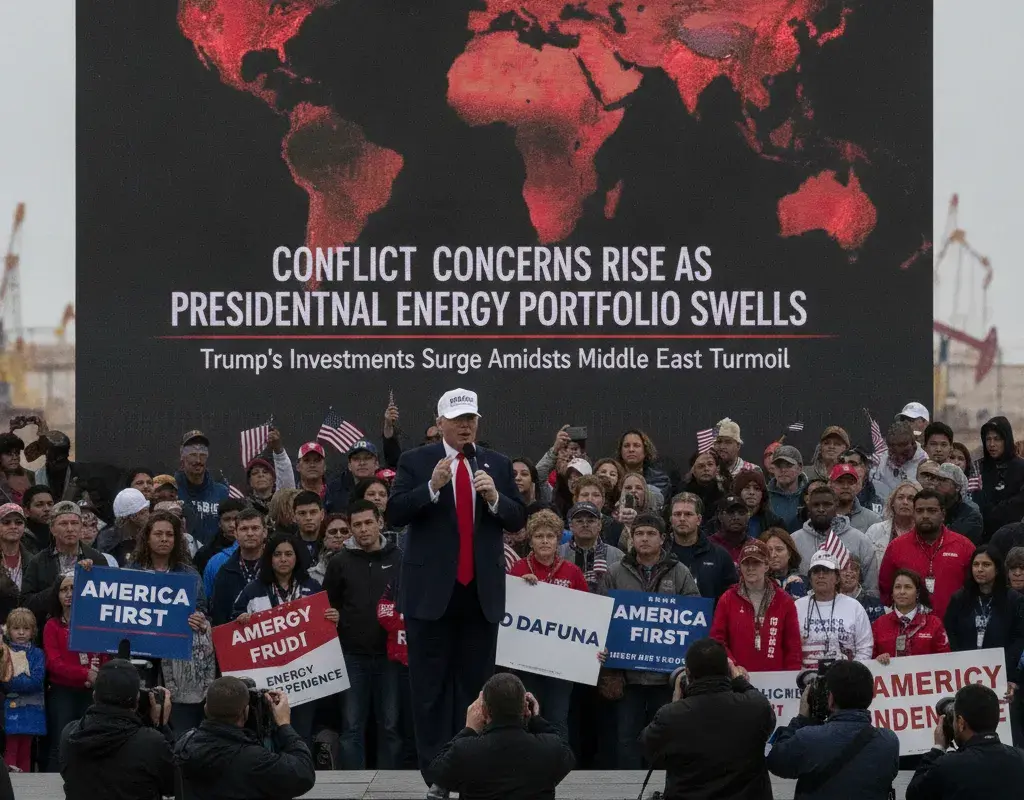
The controversy comes as the president openly celebrates the massive windfalls being enjoyed by domestic energy firms. During a recent campaign stop in Georgia, Trump boasted that U.S. oil and gas companies are making hundreds of billions of dollars due to events in the Middle East, noting that his own advisers had cautioned him against mentioning these profits publicly. While he acknowledged that current gas prices are temporarily high, he framed the industry’s success as a win for the country, even as American drivers face significantly higher costs at the pump.
Democratic lawmakers argue that this creates a troubling overlap between national policy and personal gain. Senator Maggie Hassan noted that while ordinary families are spending hundreds of dollars more on fuel, the president’s wealth in companies like Chevron and ExxonMobil continues to balloon. Records indicate that between March and August, Trump purchased millions more in energy stocks shortly after the war began, further fueling allegations that his financial interests may be aligned with prolonged market volatility.
The White House has dismissed these claims, asserting that the president does not manage his own investments. Spokesman Davis Ingle stated that Trump’s portfolio is handled by independent third party managers using automated systems designed to mirror major indices rather than target specific sectors based on political insight. Despite these assurances, critics point to contradictory statements from the president himself, including past remarks suggesting his son Eric manages certain finances and moments where he complained that big oil companies were earning too much profit from shortages.